
AI curated loans are transforming how Canadians finance smartphones and tech devices, offering an alternative to traditional carrier instalment plans that have dominated the Canadian telecommunications market for years. These machine learning-powered platforms analyze your financial profile across multiple lenders simultaneously, matching you with personalized loan options in minutes—a stark contrast to the limited, one-size-fits-all financing typically offered by Rogers, Bell, and Telus.
The fundamental difference lies in choice and flexibility. Traditional carrier financing locks you into 24-month device payment agreements tied to specific service plans, often with higher monthly rates and early termination fees. AI-driven loan matching services, conversely, connect you with independent lenders offering varying interest rates, repayment terms, and approval criteria based on your credit profile. This means you can purchase devices outright from any retailer while maintaining flexibility to switch carriers or negotiate better service rates.
For Canadian consumers, understanding these options matters financially. A $1,200 smartphone financed through a carrier at 0% interest may seem attractive, but the accompanying mandatory premium plan could cost $30-40 more monthly than competitive alternatives. AI loan platforms might offer 8-12% APR, yet enable you to pair your device with budget-friendly plans, potentially saving hundreds annually. This comparison examines both approaches objectively, helping you determine which financing method aligns with your specific circumstances and priorities.
What Is AI-Powered Loan Matching for Device Financing?

How the Technology Works
AI-powered financing platforms use machine learning algorithms to analyze consumer data and match applicants with suitable lending options for device purchases. The technology works by collecting information such as credit scores, income levels, employment history, and existing debt obligations through secure application portals.
These algorithms process the data within seconds, comparing the applicant’s financial profile against lending criteria from multiple financial institutions, credit unions, and alternative lenders. The system assigns risk scores and determines creditworthiness more quickly than traditional manual underwriting processes.
The matching process considers factors beyond conventional credit checks. Advanced systems evaluate payment patterns, banking behaviours, and even telecommunications payment history to create comprehensive consumer profiles. This data analysis allows lenders to offer personalized interest rates and repayment terms tailored to individual circumstances.
Once the assessment is complete, the platform presents ranked financing options showing interest rates, monthly payments, and total costs. Some systems also provide real-time pre-approval decisions, enabling consumers to compare offers immediately. This automated approach reduces processing time from days to minutes while potentially identifying lending opportunities that traditional applications might overlook.
Key Benefits Over Traditional Financing
AI-powered financing platforms offer several distinct advantages over traditional methods Canadian consumers typically use to purchase devices. Interest rates can be significantly lower than credit card financing, which often carries rates between 19-29% APR, as AI systems assess creditworthiness more comprehensively and may identify qualified borrowers who receive better terms. The approval process is considerably faster—often delivering decisions within minutes rather than the days required for traditional loan applications or carrier credit checks.
These platforms provide more personalized financing options by analyzing individual financial patterns and risk profiles, potentially offering flexible repayment terms that align with a consumer’s cash flow. Unlike carrier device tabs that lock customers into specific network contracts (typically 24 months with major providers like Rogers, Bell, or Telus), AI financing separates the device purchase from service agreements, giving consumers freedom to choose any carrier or switch providers without penalty.
The technology also increases accessibility for Canadians with limited credit history or non-traditional financial backgrounds, as AI algorithms evaluate alternative data points beyond conventional credit scores. This broader assessment can approve applicants who might be declined through standard channels, though borrowers should still carefully review all terms and rates before committing.
Major AI Loan Matching Platforms Available to Canadian Consumers
Bank-Affiliated Platforms
Major Canadian banks have begun integrating artificial intelligence into their device financing offerings, though adoption remains gradual compared to standalone fintech platforms. TD Bank and RBC provide digital loan applications that use AI algorithms to assess creditworthiness and approve device purchases within minutes. These solutions typically offer interest rates between 6.99% and 19.99% depending on credit scores, comparable to traditional personal lines of credit.
Scotiabank’s Scene+ program partners with select electronics retailers to provide instant financing approvals for smartphones and tablets, leveraging machine learning to streamline the application process. Credit unions like Vancity and Meridian have also introduced AI-powered small loan products suitable for device purchases, often featuring more personalized rates for members.
The primary advantage of bank-affiliated platforms is their integration with existing customer relationships, potentially offering lower rates for established clients. However, these options may lack the specialized device insurance and upgrade programs commonly bundled with carrier financing plans. Processing times, while faster than traditional applications, can still exceed the immediate approval offered by carrier in-store financing.
Third-Party Fintech Solutions
Independent fintech companies have entered the Canadian market offering AI-powered loan matching services specifically for electronics and device purchases. These platforms, such as Paybright (owned by Affirm), Flexiti, and Fairstone, use algorithms to match consumers with financing options based on their credit profiles and purchase requirements.
Unlike traditional carrier financing tied to wireless plans, these third-party solutions operate independently from telecommunications providers. The AI technology analyzes multiple lenders simultaneously, presenting personalized interest rates typically ranging from 0% to 29.99% APR depending on creditworthiness. Approval decisions often occur within minutes.
These services appeal to consumers who prefer unlocked devices or want to separate their device payments from monthly wireless bills. However, promotional 0% financing periods are generally shorter than carrier offerings—usually 6 to 12 months versus 24 months with major carriers. Consumers should carefully review terms, as interest rates after promotional periods can significantly increase total costs. Credit checks are standard, potentially affecting credit scores temporarily.
Retailer-Integrated Options
Major Canadian electronics retailers and wireless carriers have begun integrating AI-powered financing recommendation tools directly into their checkout processes. Best Buy Canada and The Source now offer digital financing assistants that analyze customer purchase history and credit profiles to suggest optimal payment plans from multiple lenders simultaneously. Bell, Rogers, and Telus stores have implemented similar systems that compare their proprietary device financing programs against third-party options, providing transparency previously unavailable at point-of-sale.
These retailer-integrated tools streamline the application process by pre-populating customer information and delivering instant approval decisions from multiple financial institutions. The AI algorithms consider factors including device cost, customer loyalty status, and current promotional offers to present personalized financing recommendations. While convenient, consumers should verify that these embedded tools genuinely compare all available options rather than prioritizing partnerships that benefit the retailer through referral commissions or higher profit margins.
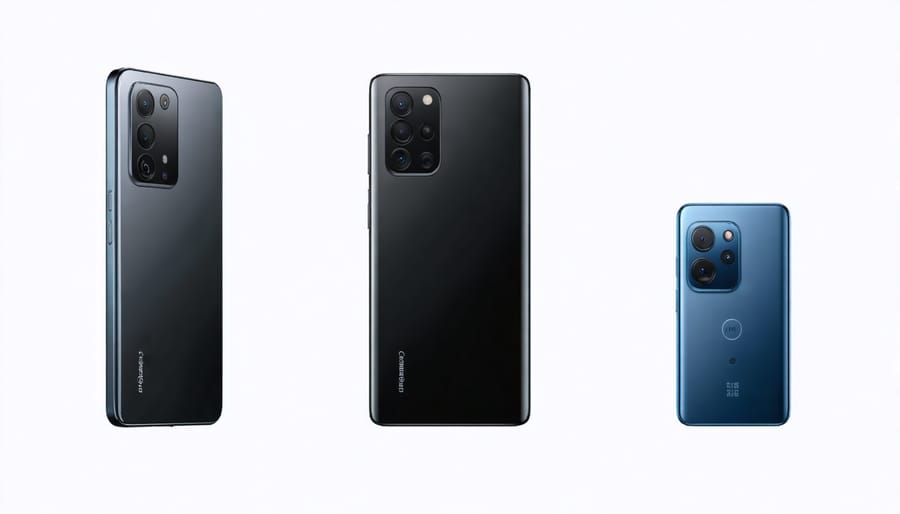
Comparing AI Loan Matching vs Traditional Carrier Device Financing
Interest Rates and Total Cost Comparison
Consider a $1,500 AI-powered smartphone purchase. Through traditional carrier financing with Bell, Rogers, Telus, consumers typically pay 0% APR over 24 months ($62.50/month) when bundled with service plans. This arrangement locks you into a contract but avoids interest charges.
AI-driven financing platforms matching consumers with third-party lenders may quote rates between 8.99% and 29.99% APR depending on creditworthiness. At 12% APR over 24 months, that same $1,500 device costs approximately $70.56 monthly, totaling $1,693—adding $193 in interest. For consumers with excellent credit scores securing promotional rates around 6%, monthly payments drop to $66.62 ($1,599 total), adding only $99.
The advantage emerges when purchasing unlocked devices without carrier commitments. If comparable service costs $20 less monthly on a discount provider, savings reach $480 over 24 months—far exceeding typical AI financing interest charges. However, prime-rate carrier financing remains cost-effective for those already committed to premium plans, eliminating interest entirely while maintaining service flexibility after contract completion.
Eligibility and Approval Requirements
Traditional carrier financing in Canada typically requires a credit check and approval through major credit bureaus, with minimum credit scores often around 650-700. Carriers verify employment and income, potentially denying consumers with poor credit history or insufficient income documentation.
AI-powered financing platforms use alternative approval methods, analyzing broader data points beyond conventional credit scores. These systems may consider banking patterns, payment history for utilities and subscriptions, and employment stability. This expanded assessment can benefit consumers who lack established credit or have past financial challenges that traditional lenders reject.
Income verification varies by platform. Some AI lenders accept alternative proof such as bank statements or digital payment histories, while carriers usually require formal pay stubs or employment letters. Approval rates through AI platforms may reach consumers earning gig economy income or those with thin credit files, though interest rates typically reflect higher perceived risk compared to prime carrier financing offers.
Flexibility and Early Payoff Options
Contract flexibility varies significantly between AI-powered financing platforms and traditional carrier plans. Most AI device financing services offer no-penalty early payoff options, allowing consumers to pay their remaining balance at any time without additional fees. Traditional carrier financing typically operates similarly, though device balance payouts are required when switching providers or upgrading before contract completion.
Upgrade policies differ substantially. Carrier programs often include built-in upgrade paths after 12-24 months, with trade-in credits incentivizing customers to remain within their ecosystem. AI financing platforms generally lack structured upgrade programs since they function as independent lenders rather than device retailers. However, once a financed device is paid off, consumers have complete freedom to purchase new devices through any channel without contractual obligations.
Early repayment penalties are uncommon across both financing types in Canada, though consumers should verify terms before committing. The key distinction lies in upgrade convenience versus financing independence—carriers prioritize customer retention through seamless upgrades, while AI platforms emphasize flexible, no-strings-attached lending.
What Canadian Consumers Need to Know Before Using AI Loan Matching
Privacy and Data Security Concerns
AI-powered financing platforms collect substantial personal information to assess creditworthiness, including financial history, employment details, income verification, and device usage patterns. Some platforms use behavioral data and smartphone activity to evaluate lending risk—raising significant privacy considerations for Canadian consumers.
Under Canada’s Personal Information Protection and Electronic Documents Act (PIPEDA), these companies must obtain meaningful consent before collecting personal data, clearly explain its purpose, and limit collection to what’s necessary. Consumers have the right to access their information and challenge its accuracy.
Traditional carrier financing typically collects less invasive data, relying primarily on credit bureau reports. AI lenders may analyze broader data sets, including social media activity or transaction histories, depending on the platform.
Before using AI financing services, Canadians should review privacy policies carefully, understand what data is collected and shared with third parties, and verify the company complies with PIPEDA. The Privacy Commissioner of Canada provides resources for consumers concerned about data handling practices. Consider whether convenience justifies the additional data exposure compared to conventional financing options.
Hidden Fees and Fine Print
When comparing AI-powered financing options with traditional carrier plans, Canadian consumers should scrutinize several potential charges. **Origination fees** (typically $25-$100) may apply when establishing a loan through AI matching platforms, covering administrative costs that carriers often bundle into device pricing. **Processing fees** ranging from $10-$50 can appear at various stages of the application.
Many AI financing services automatically include **device insurance** or protection plans, adding $8-$15 monthly to your payments. While optional, these are sometimes pre-selected during checkout, requiring deliberate opt-out. Traditional carriers similarly offer insurance, but their integration with device protection programs may differ in coverage and cost.
**Early repayment penalties** vary significantly between lenders matched by AI systems—some charge no fees, while others impose penalties for paying off balances ahead of schedule. Canadian carriers typically allow early payoff without penalty. Review the **annual percentage rate (APR)** disclosure carefully, as promotional “0% interest” offers may convert to higher rates if conditions aren’t met. Provincial consumer protection laws require transparent fee disclosure, but reading complete terms remains essential before committing.
Impact on Credit Score
AI-powered financing platforms in Canada typically conduct soft credit inquiries during the initial application and comparison phase, which do not impact your credit score. These soft pulls allow the AI algorithms to match you with suitable lenders and display potential offers. However, once you select a specific financing option and proceed with a formal application, the lender will perform a hard credit inquiry, which may temporarily lower your score by a few points.
The impact is generally minimal—typically 5 to 10 points—and credit scores usually recover within a few months with responsible payment behavior. Traditional carrier financing through Rogers, Bell, or Telus also requires hard inquiries when opening new accounts. The key difference is that AI platforms let you compare multiple options with one soft pull before committing, potentially reducing the number of hard inquiries compared to applying directly with several lenders separately. Always verify whether an inquiry is soft or hard before authorizing any credit check.
Real-World Cost Scenarios: When AI Financing Makes Sense
Understanding when AI-powered financing provides genuine value requires examining real Canadian scenarios with current device pricing.
Consider a flagship device like the Samsung Galaxy S24 Ultra, retailing at approximately $1,850 CAD. Through traditional carrier financing with Rogers or Bell, consumers typically pay $0 upfront on a premium plan ($115-130 monthly for unlimited data), with the device cost built into the contract over 24 months. The effective financing rate is often 0% APR, making this attractive for those needing new service anyway.
AI loan matching services analyze your credit profile to find personal loans or specialized tech financing. For the same device, you might receive offers ranging from 8.99% to 19.99% APR depending on creditworthiness. A $1,850 loan at 12% APR over 24 months equals approximately $87 monthly—but you own the device outright and can choose any carrier plan, potentially saving $30-50 monthly with flanker brands like Koodo or Fido.
**When AI financing makes sense:** Consumers with bring-your-own-device plans paying $40-55 monthly benefit from maintaining lower service costs. Over 24 months, total costs (device loan plus BYOD plan) could be $2,850-3,900 versus $3,600-4,680 with carrier financing, representing savings of $750-780.
**When carrier financing wins:** Those requiring premium unlimited data or switching providers anyway face minimal additional cost through traditional financing. The 0% interest effectively subsidizes smartphone purchases.
For mid-range devices under $600, AI financing interest costs often negate potential savings, making carrier promotions or upfront purchases more economical. The value proposition strengthens primarily with flagship devices when maintaining budget-friendly service plans.

The Future of AI Financing in Canadian Telecommunications
The Canadian telecommunications landscape is experiencing rapid transformation as AI-powered financing tools gain traction. Financial technology companies are expanding their AI loan matching capabilities, potentially offering consumers more personalized device financing options based on credit profiles and purchasing patterns.
Regulatory oversight may evolve as these services mature. The Financial Consumer Agency of Canada and provincial regulators could introduce guidelines specific to AI-driven lending in the telecommunications sector, particularly regarding transparency in algorithmic decision-making and consumer data protection.
Industry observers note several emerging trends: integration of AI financing directly into carrier platforms, expanded partnerships between wireless providers and fintech companies, and increased competition that may drive down interest rates. Machine learning algorithms are becoming more sophisticated at assessing risk, potentially making financing accessible to broader consumer segments.
As 5G adoption accelerates and device costs continue rising, AI financing tools may become standard options alongside traditional carrier plans. However, the technology remains in early stages within Canada’s wireless market, and consumer adoption rates will largely determine how quickly these services evolve and whether they fundamentally reshape device purchasing behaviour nationwide.
AI-powered loan matching platforms represent an evolving option for Canadians seeking device financing, offering potential advantages through automated comparisons and personalized recommendations. However, these services shouldn’t be viewed as automatically superior to traditional carrier financing or other methods. The best choice depends on individual circumstances, including credit profile, desired device, and financial priorities.
Before committing to any financing arrangement—whether through AI matching services, carrier plans, or third-party lenders—Canadian consumers should carefully review all terms and conditions. Pay particular attention to interest rates, hidden fees, credit check requirements, and the total cost of ownership over the financing period. Remember that promotional rates and zero-interest offers from carriers may provide competitive value, especially when bundled with service plans.
The key advantage of AI loan matching lies in convenience and breadth of options, but traditional methods often remain viable alternatives. Take time to compare multiple financing sources, verify lender credibility, and ensure you understand your obligations. An informed decision based on thorough comparison will ultimately serve your financial interests better than rushing into any single option, regardless of how it’s presented.