
5G home internet is a fixed wireless broadband service that delivers internet access to residential customers using fifth-generation cellular network technology instead of traditional fiber optic or coaxial cables. A 5G modem installed in the home connects wirelessly to a nearby cell tower, providing download speeds that typically range from 100 Mbps to over 1 Gbps, depending on the provider and signal strength.
The service represents a significant shift in how Canadians can access high-speed internet, particularly in areas where cable and fiber infrastructure remains limited or expensive to deploy. Unlike mobile 5G plans that come with data caps and throttling, 5G home internet typically offers unlimited data at a fixed monthly rate, making it a viable alternative to traditional internet service providers.
This article explains how 5G home internet technology works, identifies which specific providers currently offer the service in Canada and the United States (including Verizon, T-Mobile, and AT&T), and outlines the key differences between 5G home internet and other broadband options. As major carriers continue expanding their 5G networks throughout 2026, understanding the pricing, speed tiers, and availability of these services has become essential for consumers evaluating their connectivity options. For broader context on how 5G fits into the larger industry landscape, see our telecom updates.
What 5G Home Internet Means
5G home internet is wireless broadband service that uses cellular 5G networks to deliver internet to your home, replacing the need for cable, fibre, or DSL lines. Instead of installing physical wires to your house, a provider transmits data over the same 5G radio frequencies that power mobile phones, and a gateway device inside your home receives the signal and creates a Wi-Fi network for your devices.
This differs from traditional home internet in a fundamental way: there’s no technician drilling holes or running cables through walls. You plug in a gateway, it connects to a nearby cellular tower, and you’re online. It also differs from the 5G on your smartphone. Mobile 5G is designed for devices that move around, with data plans tied to your phone. 5G home internet stays fixed in one location and functions as your household’s primary broadband connection, with unlimited or high-cap data allowances similar to cable plans.
- 5G Ultra Wideband
- A high-frequency 5G network technology that delivers faster speeds and lower latency than standard 5G, used by carriers like Verizon for home internet services.
- Fixed Wireless Access
- A broadband delivery method where internet signals travel wirelessly from a tower to a stationary receiver at your home, rather than through buried or aerial cables.
- Cellular Home Broadband
- Home internet service delivered over cellular networks (4G LTE or 5G) instead of traditional wired infrastructure, allowing deployment without physical line installation.
The practical upshot: 5G home internet works like any other home broadband service once it’s set up. You connect your laptop, TV, and other devices to the gateway’s Wi-Fi, and they access the internet just as they would with cable. The difference is the infrastructure behind the scenes, cellular towers instead of underground cables, and the installation process, which typically takes minutes rather than hours or days.
How 5G Home Internet Works
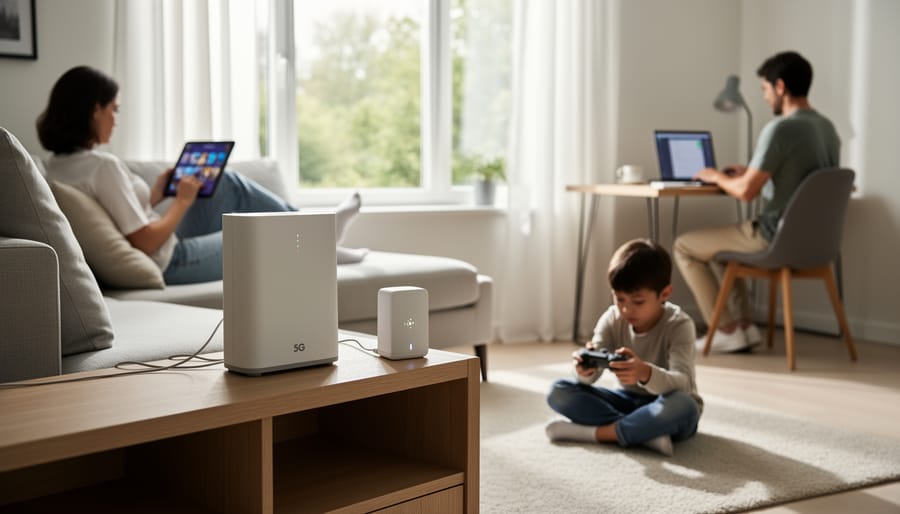
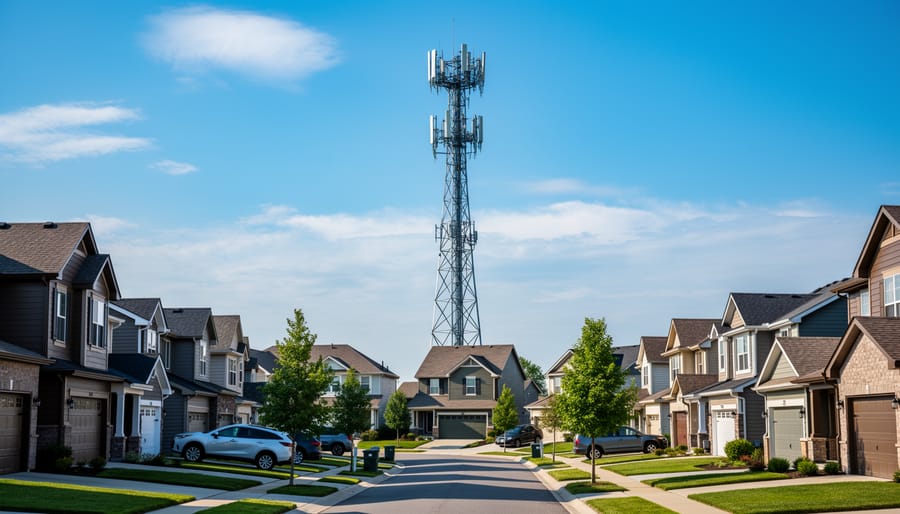
5G home internet replaces the physical cable or telephone line running to your house with a wireless cellular connection. Instead of a technician drilling holes and pulling wires through your walls, the service uses the same 5G network infrastructure that powers mobile phones, just repurposed to deliver fixed broadband to a stationary address.
The delivery mechanism relies on three core components working in sequence:
- A nearby 5G cellular tower transmits high-frequency radio signals across its coverage area
- A gateway device installed inside your home receives those signals through built-in antennas
- The gateway converts the cellular signal into a standard Wi-Fi network that your devices connect to
- No physical line installation or outdoor equipment is required at your property
The gateway itself looks like a compact router or modem. You plug it into a power outlet, position it near a window or exterior wall for optimal signal reception, and it establishes a connection to the nearest 5G tower. Some gateways include Ethernet ports for wired connections alongside Wi-Fi, but the cellular link remains wireless throughout.
Signal strength determines performance. The gateway continuously communicates with the tower using the same radio frequencies carriers deploy for mobile service, typically millimetre wave spectrum for the fastest speeds in dense urban areas, or mid-band and low-band frequencies for broader coverage in suburban and rural zones. Obstructions like buildings, trees, and distance from the tower all affect the quality of that wireless link.
Because the infrastructure already exists for mobile networks, carriers can activate 5G home internet service remotely once a gateway is registered at your address. You skip the installation appointment entirely. The trade-off is that your connection quality depends on cellular coverage at your specific location, which varies significantly between properties even on the same street.
5G Home Internet Providers
Verizon 5G Home Internet
Verizon offers 5G home internet through its 5G Ultra Wideband network, positioning the service as a competitive alternative to cable and fibre in eligible coverage areas. The carrier’s pricing starts at $35 per month when customers bundle the home internet plan with Auto Pay and an active Verizon mobile phone plan. This bundled rate includes a three-year price lock guarantee, protecting subscribers from rate increases for the duration of that commitment.
Verizon eliminates several common friction points in the home internet market: there are no hidden fees, no separate equipment rental charges, and no installation costs for the gateway device that receives the 5G signal and distributes Wi-Fi throughout the home. The straightforward pricing structure makes the total monthly cost transparent from the outset, which contrasts with traditional providers that often layer on modem rental fees, technician visit charges, or undisclosed surcharges.
The requirement to maintain a Verizon mobile plan to access the lowest pricing tier means the service is most attractive to existing Verizon wireless customers or households willing to consolidate both mobile and home internet under one carrier. Availability remains the determining factor: Verizon’s 5G Ultra Wideband coverage determines where the home internet service can be deployed, and not all addresses within a market will qualify.
AT&T Internet Air
AT&T offers Internet Air as its 5G home internet solution, priced at $65 per month. The service delivers speeds ranging from 90 to 300 Mbps, depending on local network conditions and signal strength at your address. Unlike some competing offerings, AT&T Internet Air comes with no annual contracts, giving you the flexibility to cancel anytime without penalties or termination fees.
The service also includes no data caps, which means you won’t face overage charges or throttling after hitting a monthly usage threshold. This makes it suitable for households that stream extensively, game online, or have multiple users connected simultaneously. AT&T provides the necessary gateway equipment as part of the service, eliminating separate hardware purchase requirements.
Coverage availability varies significantly by location, as the service depends on adequate 5G signal strength reaching your home. AT&T has not published a comprehensive coverage map for Internet Air, so prospective customers should verify availability directly through the carrier’s website or customer service before committing to the service.
Availability in Canada
Canada’s 5G home internet market is still developing, with major carriers including Rogers, Bell, and Telus exploring or gradually rolling out wireless home internet services in select markets. Unlike the U.S., where providers like Verizon and AT&T have established nationwide 5G home internet offerings with published pricing and coverage maps, Canadian carriers typically deploy service in specific neighbourhoods or coverage zones rather than making blanket announcements.
Coverage varies significantly by location and carrier infrastructure. A neighbourhood in Toronto might have access through one carrier but not another, while rural and suburban areas face more limited availability depending on tower proximity and network density. Some Canadian providers are piloting fixed wireless access using 5G technology without widely advertising retail plans.
Consumers interested in 5G home internet should contact Rogers, Bell, Telus, and regional carriers directly to confirm availability at their specific address. Checking each carrier’s website for coverage tools or calling customer service remains the most reliable way to determine whether 5G home internet is an option, as deployment continues to expand across different regions at varying speeds.
Types of 5G Home Internet Plans
5G home internet plans fall into several distinct categories, each designed for different customer needs and budgets. Understanding these structures helps you identify which option fits your household and whether bundling with mobile service makes financial sense.
The most common plan types include:
- Bundled plans requiring an active mobile line, such as Verizon’s $35/month tier with Auto Pay and any Verizon mobile plan
- Standalone service with no mobile requirement, like AT&T Internet Air at $65/month
- Speed tier variations offering entry-level or premium throughput, with AT&T providing 90 to 300 Mbps depending on location
- Contract flexibility ranging from no-contract options to multi-year price locks, including Verizon’s 3-year guarantee
Bundled plans typically deliver the lowest monthly cost but lock you into a specific carrier ecosystem. Verizon’s structure, for instance, eliminates hidden fees and equipment charges when you maintain both home internet and mobile service, creating savings that wireless provider signals often emphasize in quarterly results. Standalone plans cost more per month but grant freedom to switch mobile carriers or maintain existing service elsewhere.
Speed tiers matter less than with traditional broadband since 5G performance fluctuates with network congestion and signal strength. Entry-level plans often suffice for streaming and browsing, while premium tiers target households with heavy simultaneous usage. Contract terms vary: some carriers impose no commitments, letting you cancel anytime, while others offer price protection in exchange for longer terms. Check whether early termination fees apply and whether promotional rates expire after an introductory period.
Common Uses and Who Benefits
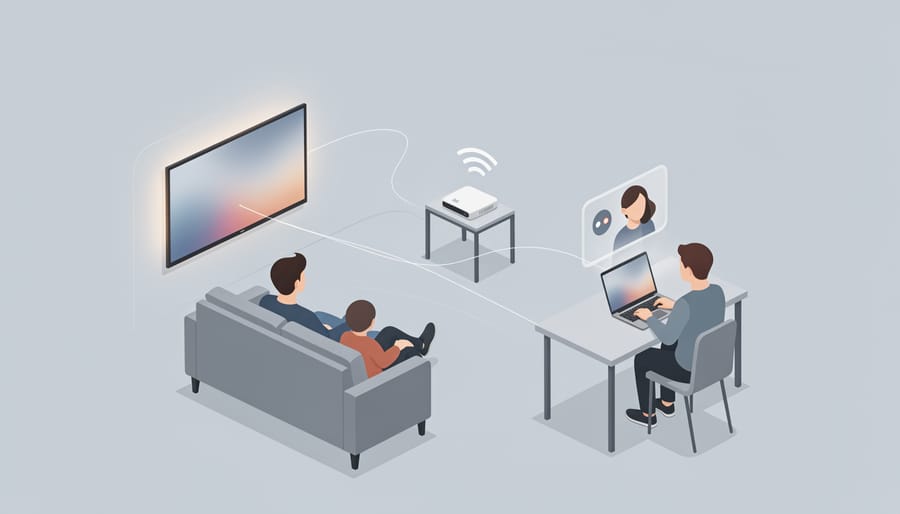
5G home internet serves households where traditional wired broadband is unavailable, impractical, or too expensive to install. Rural and suburban areas without cable or fibre infrastructure represent the primary use case, these locations can receive wireless service from cellular towers without the need for trenching or running physical lines. The technology also appeals to renters who cannot or prefer not to install permanent infrastructure, offering a plug-and-play solution that moves with them.
Another common scenario is backup connectivity. Households that rely on internet for remote work or critical services use 5G home internet as a failover option when their primary connection drops. The wireless nature means a separate infrastructure path, reducing the risk of simultaneous outages.
Ideal customers include those living beyond the reach of cable companies, people in temporary housing situations, and anyone seeking an alternative to monopolistic local providers. Speed requirements matter, users streaming video, working from home, or supporting multiple devices will want plans capable of sustained throughput rather than entry-level tiers.
In Canada, where TELUS and Bell and other major carriers continue expanding their 5G networks, the same use cases apply, though availability varies by market and neighbourhood. Check directly with Canadian carriers to confirm whether 5G home internet reaches your address and whether the plan specifications meet your household’s actual usage patterns before committing.
Frequently Asked Questions
How do I check if 5G home internet is available at my address?
Visit the website of carriers like Verizon or AT&T and enter your address in their coverage checker tool. Availability depends on 5G network infrastructure in your area, and Canadian consumers should check directly with major Canadian carriers to confirm local service options.
Do 5G home internet plans have data caps?
Many plans, including AT&T Internet Air, have no data caps, meaning you can use unlimited data each month. Some carriers may throttle speeds during network congestion, so review each provider’s terms before signing up.
What speeds can I expect from 5G home internet?
Speeds vary by provider and location. AT&T Internet Air delivers between 90 and 300 Mbps, while Verizon’s 5G Ultra Wideband can reach higher speeds depending on signal strength and network load in your area.
Which 5G home internet plan should I choose?
Compare pricing, speed tiers, and bundling requirements. Verizon offers plans starting at $35/month with Auto Pay and a mobile plan, while AT&T Internet Air starts at $65/month with no contracts or mobile service needed.
Beyond these common questions, understanding how 5G home internet fits with your existing connected home tech can help you decide if wireless broadband suits your setup. If you use streaming devices, smart home hubs, or work-from-home equipment, confirm that your chosen plan’s speed tier supports all your devices simultaneously. Check whether the carrier’s gateway device offers enough Wi-Fi range for your home layout, and ask about mesh network compatibility if you need extended coverage. For households transitioning from cable or DSL, reviewing installation requirements and testing the service during any trial period ensures the wireless signal meets your performance needs before committing long-term.
5G home internet represents a significant shift in how households connect online, replacing traditional wired infrastructure with wireless cellular technology. For consumers without access to cable or fibre, or those seeking installation-free alternatives, it offers a viable broadband solution delivered through a home gateway device that communicates with nearby 5G towers.
The provider landscape features established carriers like Verizon, which guarantees three-year price locks and charges no hidden fees or equipment costs, and AT&T, which delivers speeds between 90 and 300 Mbps without data caps. These US-market examples demonstrate the service’s maturity and competitive pricing structures.
In Canada, the 5G home internet ecosystem continues to evolve as major carriers expand their wireless broadband offerings. Because coverage remains location-specific and plan structures vary by market, Canadian consumers should verify availability directly with carriers serving their area. Check whether providers require bundling with mobile plans, what speed tiers they offer, and whether contracts apply.
5G home internet’s no-installation advantage and flexible plan options make it particularly suited for renters, rural households, and anyone seeking backup connectivity. As networks expand and more carriers enter the market, this wireless alternative will likely become accessible to broader segments of the Canadian population.