
“W accessory” isn’t a single product category. It’s shorthand shoppers and search engines use for wireless and wearable add-ons: earbuds, smartwatches, fitness bands, wireless chargers, and the small gadgets that pair with your phone over Bluetooth or Wi-Fi. If you searched the term hoping to find out what’s new, the most useful answer is that the category keeps shifting in the same few directions: better battery life, wider device compatibility, and tighter links to the carrier network.
For Canadian consumers, that shift matters more than any single launch. Some accessories now connect directly to a cellular plan through eSIM, which can mean an extra monthly charge. Others rely on your phone alone and cost nothing beyond the purchase price. Knowing the difference before you buy can save you real money.
This article defines the term, walks through the developments shaping wireless and wearable accessories, and explains what they mean for your wallet. Availability and pricing change often, so check official carrier and manufacturer sites for current Canadian details.
What Changed in How Wireless and Wearable Accessories Reach Canadian Shoppers
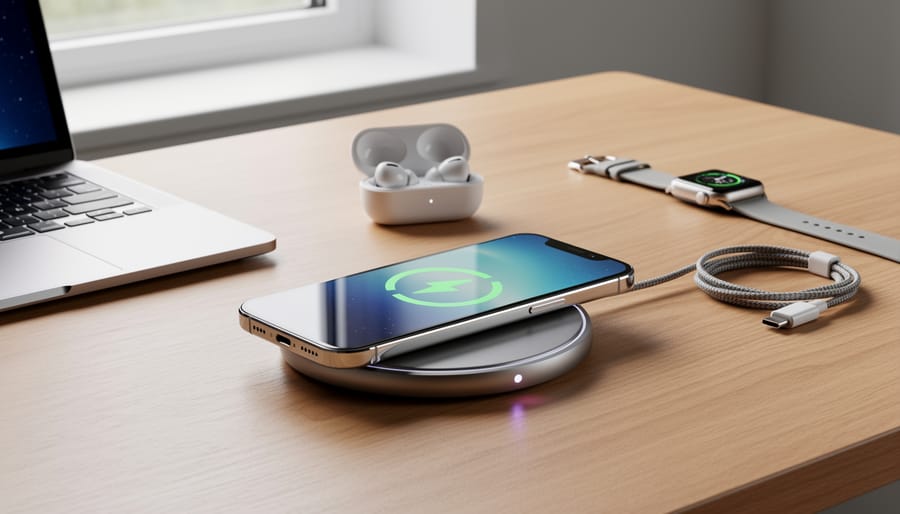
“W accessory” isn’t an official product category, so the phrase can mean different things depending on who’s using it. In most consumer contexts it points to a wireless or wearable add-on: a charger, case, earbuds, smartwatch band, or tracker that works with a phone or similar device. “Wireless” means the accessory connects or draws power without a cable. Bluetooth is the short-range radio standard behind most wireless pairing, while Qi (pronounced “chee”) is the standard that lets compatible devices charge by sitting on a pad. “Wearable” simply means a device worn on the body, such as a watch or fitness band.
The bigger shift is in how these products reach shoppers. Accessories now often launch alongside a new device or soon after, rather than trickling in months later. They also sell through more channels at once: carrier stores and websites, big-box and online retailers, and manufacturers’ own direct-to-consumer shops. That gives Canadians more places to buy, but it also means listings, bundles and pricing can look different depending on where you shop.
Because many accessories are built around those shared standards, compatibility is less tied to a single brand than it once was. Still, support varies by model, so check official manufacturer and carrier announcements for what is currently listed in Canada.
Key Developments Shaping Accessory Releases in Canada
1. Wireless Charging Standards Make Accessories More Interchangeable
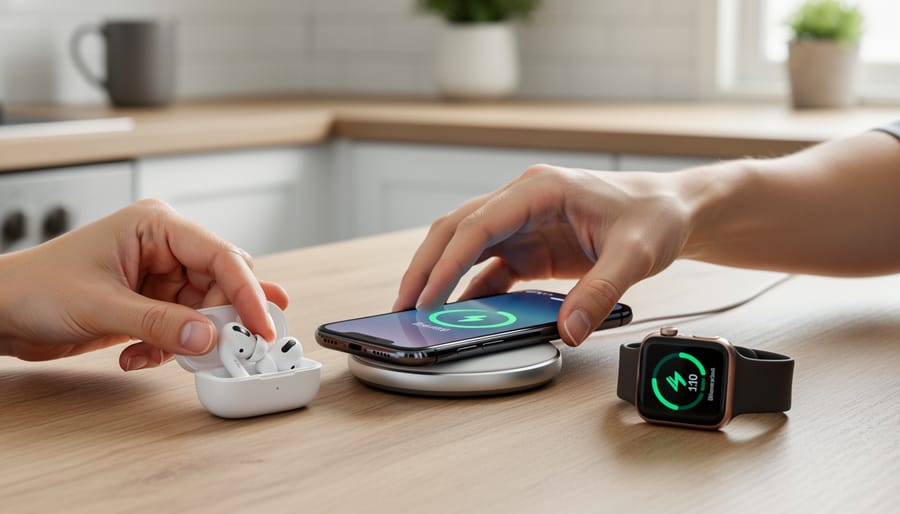
Wireless charging used to be a gamble. Pick up a charging pad from one brand and there was no guarantee it would line up properly with a phone from another. Qi (pronounced “chee”), the standard maintained by the Wireless Power Consortium, changed that by defining how a charger and a device exchange power without a cable. Any Qi-certified pad should, in principle, charge any Qi-certified phone, earbud case or smartwatch dock.
The newer Qi2 standard goes a step further by adding magnets. Instead of relying on you to position a device just right, Qi2 magnetic alignment uses a ring of magnets to snap the device into the ideal charging position. Better alignment means less wasted energy as heat and more consistent charging speeds. It also gives cases, stands and car mounts a common attachment design.
For Canadian buyers, this makes accessories far more interchangeable across brands. Still, “Qi-compatible” does not always mean “Qi2-ready,” and a magnetic case needs to match your specific phone model. Before buying, check the device’s official compatibility list and look for the Qi or Qi2 certification mark on the packaging.
2. Wearables and Audio Accessories Tied to Phone Ecosystems
Smartwatches, wireless earbuds and item trackers are rarely designed to stand alone. Most arrive as companions to a specific phone platform, and that pairing shapes what they can actually do.
The basic connection is usually Bluetooth, which lets nearly any phone play audio through nearly any earbuds. The difference shows up in the extras. Features such as one-tap pairing, automatic switching between devices, health data syncing, and finding a lost tracker on a network of nearby phones often work best, or only, when the accessory and phone come from the same ecosystem. A smartwatch may still show notifications on a phone from another brand, but with fewer controls and limited health or payment features.
For Canadian shoppers, this means compatibility is worth checking before the price tag. Look at the manufacturer’s listed supported phones and operating system versions rather than assuming a w accessory will behave the same way everywhere. Cross-platform options exist, and some brands deliberately support both major phone platforms, though feature sets can differ.
Think about how long you plan to keep your phone, too. If you may switch brands later, an accessory with broader compatibility can hold its value better than one tied tightly to a single ecosystem.
3. Carrier and Retail Channels Compete on Accessory Availability
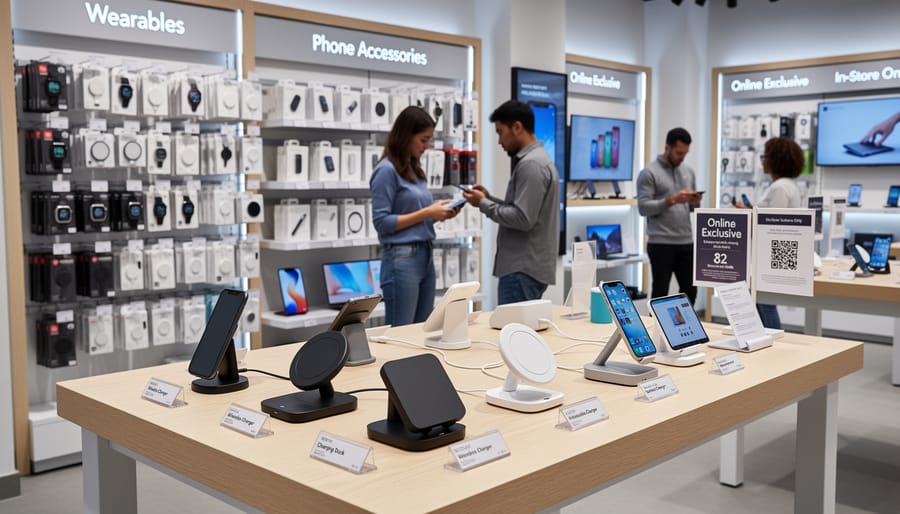
In Canada, the same accessory can reach you through three main channels, and each treats price and returns a little differently.
Carriers often fold accessories into device deals, either as a bundle with a new phone or as an item you can add to a monthly financing plan. That spreads the cost out, but it can also tie the accessory to your account, which may complicate returns or changes later.
Big-box electronics and general retailers usually sell accessories as standalone purchases. They tend to run frequent promotions, and their return windows are set by store policy rather than by the manufacturer.
Manufacturer stores, whether online or in person, typically offer the full product range and the clearest warranty path, though not always the lowest price.
Because promotions, bundle terms and return policies change often, confirm the current price, return period and warranty terms with the seller before you buy.
4. Certification, Safety and Regulatory Labels Matter More
Wireless chargers and battery-powered accessories carry real safety stakes, so the labels on them are worth a look. In Canada, an “IC” mark points to Innovation, Science and Economic Development Canada (ISED) rules, which cover radio emissions from wireless devices. Safety marks from recognized testing bodies, such as CSA or cUL, show that a product was tested against electrical and fire standards.
Missing or unclear marks are a warning sign, especially on very cheap chargers. Certified products are easier to claim against under warranty and consumer-protection rules. Check the product, packaging, or manufacturer listing before buying.
Why It Matters for Canadian Consumers
Accessory choices carry more weight than their price tags suggest. A charger or wearable that doesn’t work with your phone is simply money spent, and in Canada the gap between a good and a poor purchase often comes down to details that are easy to overlook.
Compatibility comes first. Two accessories can look identical and still behave differently depending on the device, so confirm support for your specific model rather than assuming a shared standard covers it.
Total cost of ownership matters too. The sticker price leaves out taxes, replacement cables, and the cost of buying again if something fails. Carrier bundles can lower the upfront cost, but they may tie you to a plan or financing term, so it helps to weigh them alongside broader phone bill changes before treating a bundle as a bargain.
Warranty coverage and safety deserve the same attention. Coverage can differ between a manufacturer, a retailer and a carrier, and uncertified chargers and batteries carry real heat and fire risks.
Before you buy, check the following:
- The accessory is listed as compatible with your exact device model.
- It carries recognized Canadian certification marks, such as ISED/IC and a safety label.
- The warranty applies in Canada and its terms are clearly stated.
- The seller’s return window is long enough to test the product properly.
- The final price includes taxes and any required extras.
Working through this list takes a few minutes and prevents most of the common frustrations.
What to Watch Next in Accessory Releases
Accessory news moves quickly, so the most useful habit is knowing where to look rather than guessing what comes next. Start with official manufacturer announcements, which are the most reliable source for new chargers, cases and wearables. Next, follow your carrier’s channels, since wireless provider updates often signal changes to bundles, financing and in-store accessory offers.
Retailer listings are worth a regular check too, because stock, pricing and return terms can differ between stores. Keep an eye on standards body updates, such as those from the Wireless Power Consortium for Qi charging, as they explain what new certifications actually mean. Finally, read compatibility notices carefully before buying. They tell you whether an accessory works with your specific device and which Canadian certification marks it carries.
W Accessory and Tech Accessory Release FAQs
What does “w accessory” mean?
It usually refers to a wireless or wearable add-on for a phone or similar device, though the term is loosely used and varies by brand.
Are accessories compatible across brands?
Often, when they follow shared standards like Qi or Bluetooth, but always check your device’s compatibility list.
Where can I confirm Canadian availability?
Manufacturer and carrier websites list current Canadian stock and pricing.
What safety labels should I look for?
Look for ISED/IC and recognized safety certification marks, especially on chargers and batteries.
For related reading, see our guide to TEC 9 accessories.
Accessory releases are shaped by shared standards, ecosystem ties and varied Canadian sales channels. Before buying, confirm compatibility, certification marks and current pricing directly with the manufacturer, carrier or retailer.