
The GLOW peptide blend is a combination product that pairs several research-grade peptides, short chains of amino acids, into a single formulation sold under one name. Sellers in Canada and elsewhere typically market it for skin, tissue and general wellness research, though no single manufacturer or lab owns the name. If you want to see how one supplier presents its formulation, you can view the blend and compare it against the history below.
That history matters because the label suggests a formal product lineage, and the reality is less tidy. The individual peptides behind blends like this have been studied for decades. The bundled “GLOW” format is much newer and largely a product of online retail.
Key Takeaway: The GLOW blend is a marketing-era product built on decades of legitimate peptide research, not a single clinical invention. Its exact origin and composition vary by seller, so check each supplier’s documentation before drawing conclusions.
This article traces where the blend came from, what is documented, and where origin details are thin.
What the GLOW Peptide Blend Means
When people talk about the GLOW peptide blend, they are usually describing a single product that combines several peptides. To read that label clearly, it helps to break the phrase into its parts.
Start with the basic science: peptides are short chains of amino acids the same building blocks that link together to form larger proteins. In a product context, “blend” simply means several of these peptides are mixed into one formulation instead of being sold separately.
- Peptide
- A short chain of amino acids, smaller than a full protein, that can act as a signalling molecule in the body.
- Blend
- A single formulation that combines more than one peptide, sold as one product.
- Amino acid
- The basic building block of peptides and proteins.
- Research peptide
- A peptide supplied for laboratory study rather than as an approved medicine.
- “For research use only” label
- A seller’s notice that a product is not intended for human use or as a treatment.
The word “GLOW” is not a formal scientific or pharmaceutical designation. It is a product or brand-style label, and there is no single agreed definition behind it. Naming varies between sellers, so two products both called GLOW may contain different peptides in different amounts.
The term appears most often in beauty, skin and wellness marketing, where it suggests a healthy appearance. Treat it as a marketing name, not a guarantee of what is inside.
Where the GLOW Peptide Blend Came From: A Brief History

From Laboratory Research to Consumer Products
Peptide science began in academic laboratories. In the early 1900s, chemists such as Emil Fischer showed that amino acids could be joined into short chains. By 1953, Vincent du Vigneaud had synthesized oxytocin, a landmark that showed peptides could be built deliberately rather than only extracted from animals. Pharmaceutical research followed, and peptide-based drugs for conditions like diabetes became established medicines over the following decades.
That work left behind techniques, reference compounds and a growing supplier base. Once chemists could produce specific peptide sequences reliably and at lower cost, cosmetic developers began testing some of them as ingredients in skin-care formulations. Wellness brands later borrowed the same vocabulary and the same ingredient names.
The crossover matters for context. Research findings about a peptide in a lab or a regulated drug trial do not automatically carry over to a consumer product that uses the same name.
How Online Sellers and Social Media Popularized Blends
E-commerce is where combined peptide products really took off. Once suppliers began listing multi-peptide formulations under a single branded name, shoppers could buy several ingredients in one click instead of sourcing each separately. A tidy product page with a catchy label like “GLOW” was far easier to sell than a list of individual compounds.
Social media then amplified the reach. Influencers, wellness creators and short-form video accounts showed routines and shared before-and-after posts, often with affiliate links attached. That kind of content spreads quickly, but it rarely comes with independent evidence, so shoppers should read online marketing claims with a critical eye.
Direct-to-consumer selling also removed the usual middlemen. Canadian shoppers can order from domestic stores or cross-border sellers using the same apps and marketplaces they already use for everyday purchases. Because listings, labelling and quality control vary widely between sellers, popularity online says little about how a particular blend was made or tested.
How the GLOW Peptide Blend Works
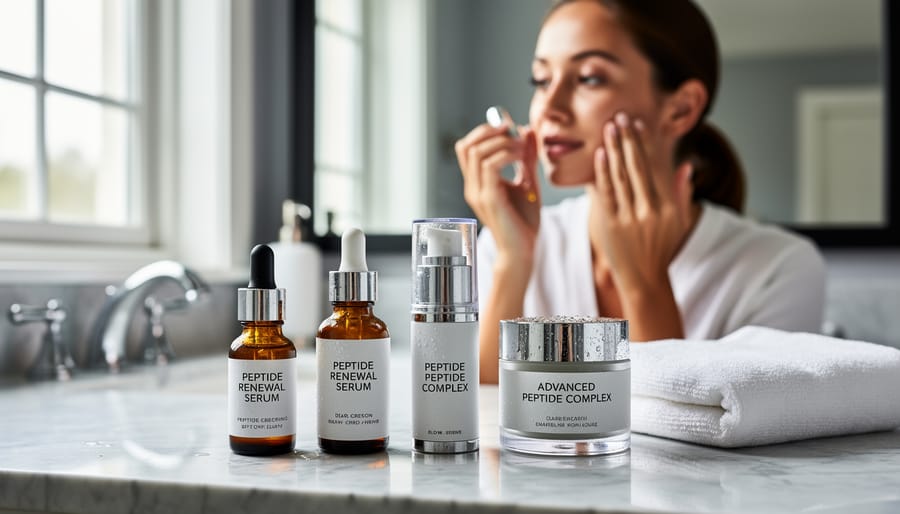
Peptides act as signalling molecules. In the body, certain short amino acid chains can bind to receptors on cells and influence processes such as collagen production, tissue repair or inflammation. Sellers of GLOW-style blends build on this general idea. They claim that combining several peptides in one formulation targets different aspects of skin appearance or related functions at once, though the specific combinations vary from seller to seller.
The way a blend is delivered matters, and the two main approaches are quite different.
Topical products, such as creams and serums, are applied to the skin’s surface. Their peptides must penetrate the outer skin barrier to have any effect, and many peptides are large enough that absorption is a recognised challenge. Formulators use carrier ingredients and delivery technologies to address this, with varying results.
Injectable products are typically sold as lyophilized (freeze-dried) powders in vials, often labelled for research use. They are reconstituted with a liquid before use and bypass the skin barrier entirely. Labelled “research grade” usually means the product is not intended for human use and has not gone through the approval process that medicines do.
The evidence behind these products is uneven. Some individual peptides have been studied in laboratory or clinical settings, and the strength of that evidence differs from one peptide to the next. For blends as a whole, clinical evidence is limited or unavailable, so it is unclear whether combining peptides produces the effects sellers describe. Marketing claims about visible results should therefore be read as claims, not proven outcomes.
Common Components and Formats of GLOW Blends
Sellers rarely agree on what goes into a GLOW blend, but a few peptides appear often in the listings. GHK-Cu, a copper-binding peptide, is the one most associated with skin-focused products. Some blends also name BPC-157 or TB-500, which are more often discussed in recovery-related research. Because “GLOW” is a marketing label rather than a formal designation, one seller’s blend may share little with another’s.
Formats vary as much as composition. Topical creams and serums are sold as skincare, while lyophilized (freeze-dried) powders in vials are typically labelled for research use and require reconstitution. When comparing listings, these are the details worth checking:
- Format: cream, serum, lyophilized powder or pre-mixed vial.
- Ingredient list: whether each peptide is named, not just “peptide complex.”
- Concentration: the amount of each peptide per dose or per vial.
- Batch or lab testing information: whether a certificate of analysis is provided and traceable to a batch.
- Seller identity: a verifiable business name, contact details and location.
Even when all of this is listed, labels may not be independently verified. Composition and concentration can differ between sellers, and sometimes between batches from the same seller, so a label is a claim rather than a guarantee.
How the Blend Is Used and Sold in Canada
GLOW blends are marketed mainly for skin and wellness routines. Sellers pitch them as add-ons to skincare habits, and listings tend to lean on before-and-after photos, influencer posts and social media ads. That pattern is familiar from telecom promotions, where how ads affect consumers often matters as much as the product itself.
Many Canadians buy these products from foreign websites, which makes checking the seller harder. Labels, ingredient lists and concentrations may not be verified, and a package that crosses the border may not meet Canadian standards.
Classification matters here. Health Canada treats cosmetics and drugs differently, and a product making claims about changing body functions can fall into drug territory. The cosmetic-drug interface guidance explains how that line is drawn. Injectable “research-grade” peptides sold without approval are especially uncertain. The same logic applies to other regulated product rules: legal sale depends on meeting the category’s requirements.
Before buying, look for a Canadian address, clear contact details, transparent ingredient lists and realistic claims. A licensed health professional can answer questions about any specific product.

Frequently Asked Questions About the GLOW Peptide Blend
Is GLOW an official scientific name?
No. GLOW is a product or brand-style label, so what it contains can differ from seller to seller.
Is it approved by Health Canada?
No blend should be assumed to be approved. Check a product’s status directly with Health Canada, since injectable versions may be treated as unapproved drugs.
How can shoppers evaluate online claims?
Look for clear ingredient lists, independent testing and a verifiable seller, and treat marketing claims as unproven.
Topical and injectable versions are different product categories with different regulatory treatment, so it helps to confirm which format you are looking at before reading any claims.
The GLOW peptide blend rests on well-established peptide science, but its identity as a product comes mostly from online marketing, not from a single documented discovery or inventor. For Canadian consumers, that means treating product claims cautiously. Check a product’s regulatory status with Health Canada, verify the seller’s credibility, and speak with a licensed health professional before using any peptide product.